Regulatory news and insights
Updates on EU, UK and international cosmetics regulations, explained by our regulatory team.
5 most common mistakes on cosmetic product labels
Cosmetic product labels and 5 most common mistakes. Correct cosmetic product labels are important part of ensuring compliance of cosmetic products with the EU cosmetics regulation 1223/2009. Mistakes on the labels, especially on products that come outside of the EU are common, and because labels are the first thing that consumers and inspectors come in contact…
Read article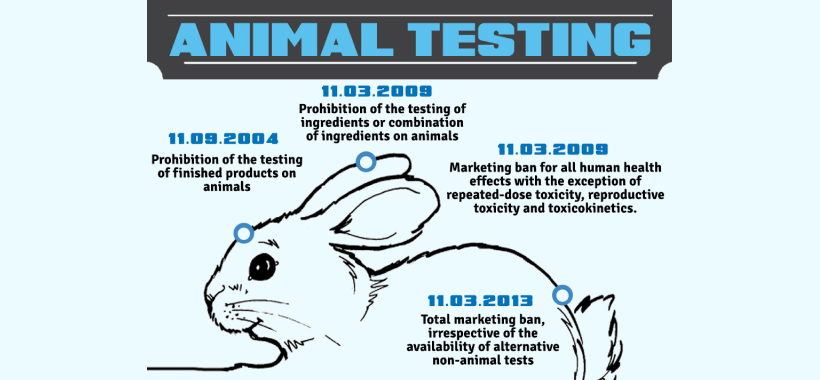
EU Court Asserts Ban on Animal Testing for Cosmetics
Animal Testing in EU for cosmetics. On September 21, 2016, the EU Court of Justice (ECJ) has confirmed that there will be no exception to the ban on animal testing in EU for any cosmetic product, even if the tests have been conducted anywhere in the world after March 11, 2013. Presently, cosmetic products which…
Read article
Who can be a cosmetic product safety assessor?
Cosmetic product safety assessor Part B of the Cosmetic product safety report (CPSR), the Cosmetic product safety assessment, is the most important part of the product information file and of ensuring compliance of the cosmetic product with the EU cosmetics regulation 1223/2009. Cosmetic product safety assessment can’t just be performed by anyone. The EU cosmetics…
Read article
Methylisothiazolinone officially banned! And some other changes as well…
Methylisothiazolinone officially banned In July there have been a few updates in the EU cosmetics regulation. The updates were the following: Carbon black: Carbon Black (nano) (according to the SCCS\’s specifications) is authorized for use as a colorant in cosmetic products at a maximum concentration of 10 % w/w, except in applications that may lead…
Read article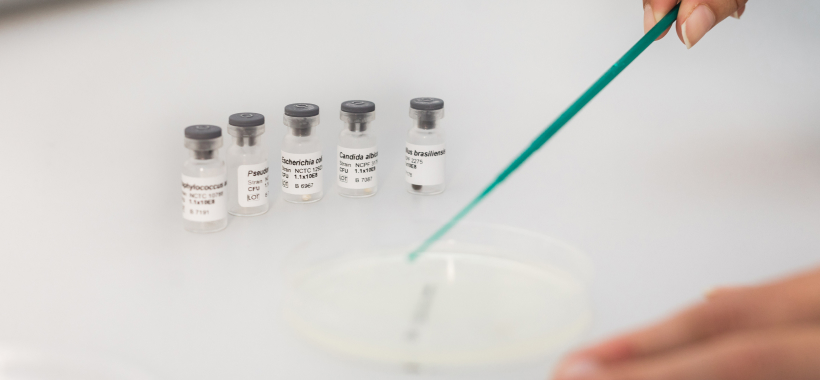
Which cosmetic products don’t require challenge test?
Cosmetic challenge test The degree of microbiological risk for the products depends on the ability of a product to support the growth of microorganisms and the probability that those microorganisms can cause harm to the user. The likelihood of microbiological contamination for some cosmetic products is extremely low (or non-existent) due to product characteristics (which include…
Read article
K Beauty EU cosmetics regulation seminar held by CE.way and Wise
K Beauty EU cosmetics regulation CE.way and Wise Company Inc. will hold an EU cosmetics regulation seminar at K Beauty in Seoul, Korea in October. Tadej Feregotto, the CEO of CE.way Regulatory Consultants Ltd, will present the current EU cosmetics regulation and what Korean and other non-EU companies have to do in order to be…
Read article
Cosmetic products definition in the EU
Cosmetic products definition in the Regulation 1223/2009 as follows: ‘Cosmetic products definition’ means any substance or mixture intended to be placed in contact with the external parts of the human body (epidermis, hair system, nails, lips and external genital organs) or with the teeth and the mucous membranes of the oral cavity with a view exclusively…
Read articleMethylisothiazolinone to be banned in leave-on products
Methylisothiazolinone banned A vote on the ban of methylisothiazolinone in leave-on products was recently held at the European Commission, where all of the member states voted in favour of introducing this ban. A 90-day scrutiny period is now taking place whereby the European Parliament and Council are consulted before the draft measure can be adopted. After adoption…
Read article
Cosmetic products nanomaterials
Cosmetic products nanomaterials The EU Regulation 1223/2009 defines cosmetic products nanomaterials as: ‘Nanomaterial’ means an insoluble or biopersistant and intentionally manufactured material with one or more external dimensions, or an internal structure, on the scale from 1 to 100 nm. (EU Regulation 1223/2009, Article 2.1.k) The nanomaterial provisions of EU Regulation 1223/2009, however, don’t apply to…
Read article
CE.way is now offering a fast track safety assessment
Fast track safety assessment Time is money, and at CE.way we\’re aware of that. We know that waiting for weeks for a safety assessment to be done is not pleasant, unreasonable and that manufacturers are losing money because of the delay. That\’s why we\’re commited to providing a fast service whenever we can and we…
Read article
EU regulation updates and revisions of SCCS opinions
SCCS opinions Some updates regarding the EU cosmetics regulation and SCCS opinions: The maximum allowed concentration for Ethyl Lauroyl Arginate HCI when used in mouthwashes is proposed to be reduced to 0.15% and prohibited for use in mouthwashes intended for children until the age of 10. SCCS opinions – all of these are revisions of…
Read article
How to write the ingredient list on the cosmetic product label in the EU
Cosmetic product label One of the obligatory mentions on the cosmetic product label in the EU is the list of ingredients. EU cosmetics regulation 1223/2009 provides specific rules as to which ingredient names have to be used and in which order the ingredients have to be written. Ingredient list: The ingredient list shall be preceded…
Read articleReady to launch your cosmetic products globally?
Speak with our regulatory experts about compliance, testing, and market access requirements.
