





"Pharmaplast began to work with CE.way almost one year ago. CE.way is our cosmetics consultant who look after compilation of PIF, safety assessments and CPNP notifications. Working with CE.way has been a joy so far. Their replies are very swift and Mr Tadej is very cooperative, helpful and with a deep knowledge about the cosmetics regulations."
EU Cosmetics Regulation 1223/2009
Stability and compatibility compatibility test
Stability and compatibility testing evaluates whether a cosmetic product maintains its quality, safety and intended performance throughout its expected shelf life. It also confirms that the selected packaging remains compatible with the formulation during storage, transport and normal consumer use.
The results of stability and compatibility testing can be used to support shelf-life determination, Product Information Files (PIFs), Cosmetic Product Safety Reports (CPSRs), and other technical documentation required for cosmetic products.

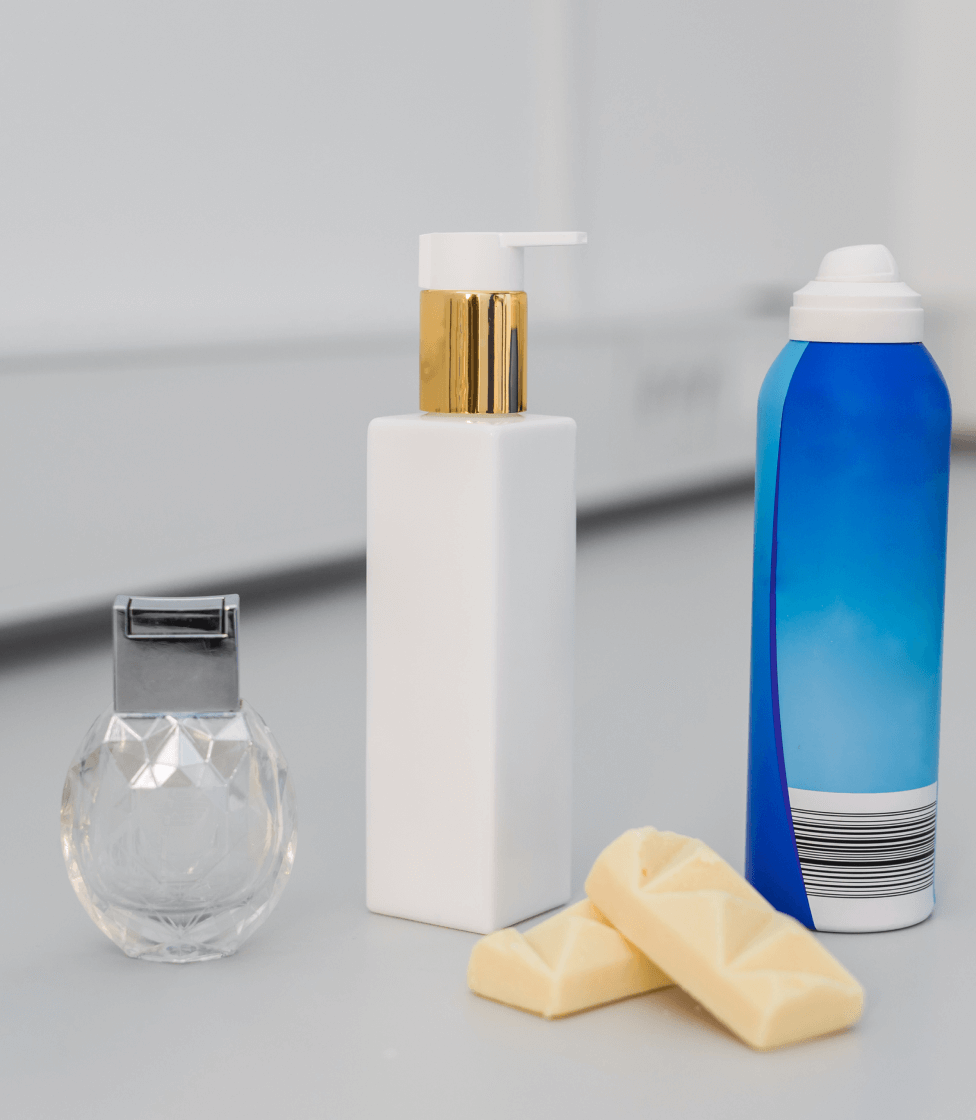
Packaging & compatibility
Packaging and product compatibility
The type and quality of packaging used also affects the stability of the product, as it protects the cosmetic product from the external environment.
On the other hand, potential leaching of substances in the packaging into the product must be evaluated. For this reason, compatibility between the packaging and its contents must be investigated, in order to ensure that no quality problems are introduced by the type of packaging material used.
All cosmetic products should be subjected to the stability and compatibility test; there are no exceptions as for the preservative efficacy test. Stability and compatibility tests must be repeated every time there is a change in the formula, packaging or manufacturing process.
Testing procedure
How is the cosmetics stability test performed?
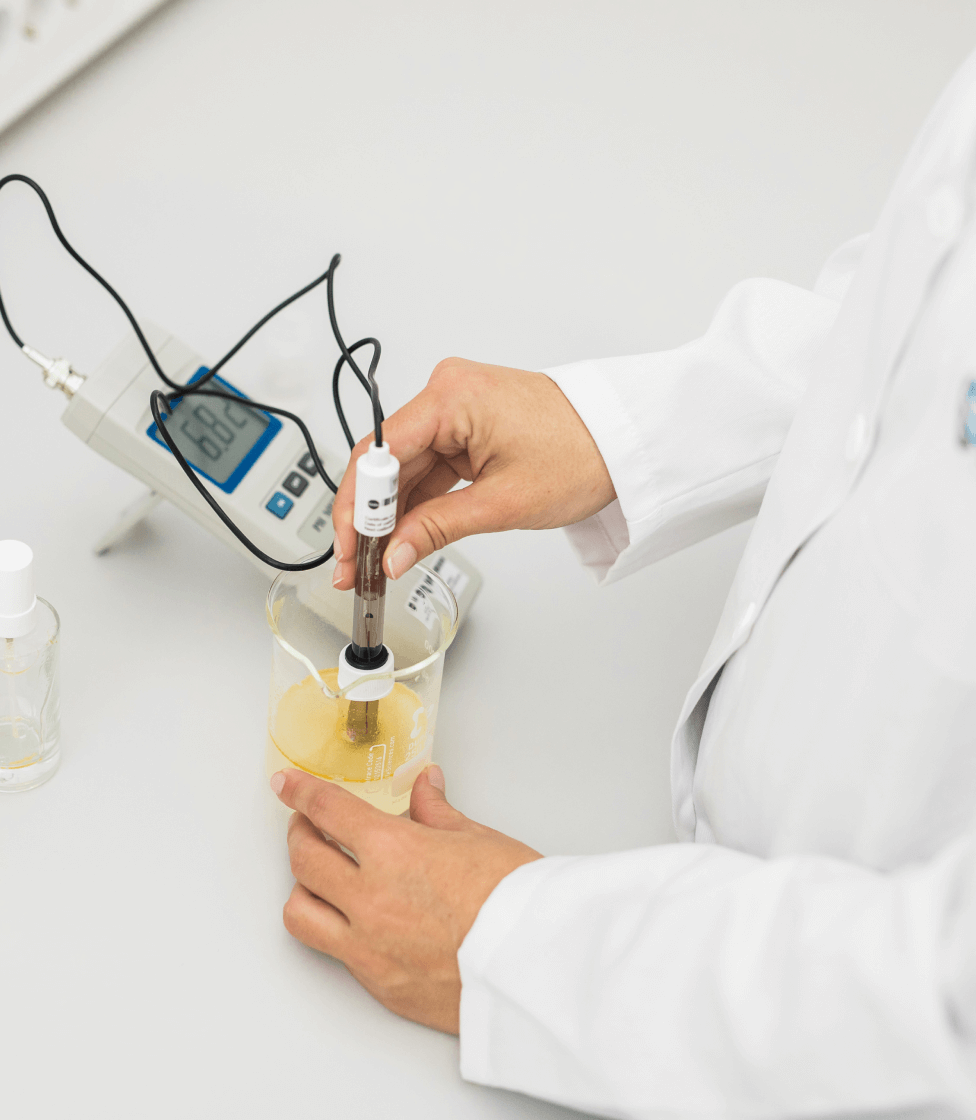
Testing procedure
How is the cosmetics stability test performed?
The cosmetics stability test can be performed:
- Real time stability study: Assess the product under normal storage conditions throughout its intended shelf life.
- Accelerated stability study: Expose the product to elevated stress conditions to identify potential stability issues and estimate long-term performance within a shorter period.
The time that it takes to complete the test and the conditions under which it is performed can vary, as can the parameters that are monitored during the stability and compatibility test.
Real-time stability tests are usually performed at room temperature and take as long as the claimed shelf life on cosmetic product labels.
Due to time constraints, most companies decide to perform the accelerated stability test, which normally includes keeping the samples at elevated temperatures (37, 40 or 45 degrees Celsius) over a period of three months.
CE.way also tests the stability in a refrigerator and performs a freeze-thaw test, which is usually used to predict the stability of the product during transport. If transparent packaging is used, we also test the stability of the product when exposed to sunlight.
Recommendations
When is stability testing recommended?

Recommendations
When is stability testing recommended?
- New product development
- Reformulation
- Packaging changes
- Shelf-life extension
- Change of manufacturing process
- Change of raw material supplier
Test parameters
Test considerations & monitoring
The most appropriate testing programme depends on the product formulation, packaging, intended shelf life, storage conditions and the specific objectives of the study. Our specialists help select a protocol that is appropriate for the product and its intended market.
01
What the stability test should consider
- It should identify the tests that will predict the effects of normal conditions of storage and use by the consumers
- It should evaluate the critical physical, chemical and microbiological properties of each product
- Variation in process conditions
- The impact of packaging on the contained product and the effect of the product on the packaging
02
What we monitor during the stability test
- Various physical and chemical specifications of the product (such as pH, viscosity and density)
- Organoleptic properties (colour, odour, appearance)
- Packaging integrity and compatibility
03
What will you receive
- Stability and compatibility test report
- Summary of observations and measurements
- Shelf-life assessment
- Packaging compatibility assessment
- Recommendations (where applicable)
Stability & compatibility testing
FAQ
A stability and compatibility test is a comprehensive evaluation required under EU Cosmetics Regulation 1223/2009 to ensure that a cosmetic product remains safe, effective, and stable throughout its lifecycle. This includes the period from manufacturing, through storage and transport, to final consumer use. Stability testing focuses on how the product behaves over time under different environmental conditions, while compatibility testing assesses the interaction between the product and its packaging. Together, they form a critical part of the Product Information File (PIF) and are essential for regulatory compliance and market approval.
Stability testing is crucial because it verifies that a cosmetic product maintains its intended quality, safety, and performance over time. Without proper testing, a product may degrade, separate, change in color, odor, or texture, or lose its effectiveness. It also ensures compliance with EU regulations and helps determine the correct shelf life and Period After Opening (PAO), which are mandatory for labeling and consumer safety.
Yes, stability and compatibility testing is mandatory for all cosmetic products placed on the EU market. It is required under EU Cosmetics Regulation 1223/2009, specifically referenced in Annex I as part of the cosmetic product safety information. There are no exceptions, meaning every product must undergo this evaluation to ensure it meets safety and quality standards before being sold.
Stability testing evaluates how a cosmetic product performs over time under various temperature conditions. In contrast, compatibility testing focuses on the relationship between the product formulation and its packaging materials, including chemical interactions (e.g., leaching, absorption), physical changes (e.g., deformation, discoloration) and functional integrity (e.g., pump clogging, seal failure). It ensures that no harmful substances migrate from the packaging into the product and that the packaging does not negatively impact the product's quality, safety, or performance.
Stability and compatibility tests must be repeated whenever there is a significant change in the product formulation, packaging, or manufacturing process. Even small modifications can affect the product's stability and safety, so re-testing is essential to maintain regulatory compliance and ensure consistent product performance.
A cosmetic stability test can be conducted in real-time conditions or using accelerated testing methods. Real-time testing involves storing the product under normal conditions for the duration of its expected shelf life, while accelerated testing exposes the product to higher temperatures (40°C) to simulate aging over a shorter period. Additional tests included are freeze-thaw cycles and refrigeration, depending on the product and packaging.
During stability and compatibility testing, several key parameters are monitored to ensure product integrity. These include physical and chemical properties such as pH and viscosity, as well as organoleptic properties like color, odor, and texture. In addition, microbiological stability and packaging interaction are evaluated to ensure the product remains safe and effective throughout its lifecycle.
Packaging plays a critical role in maintaining the stability of cosmetic products by protecting them from external factors such as light, air, and contamination. However, certain packaging materials may interact with the product, leading to leaching of substances or changes in product composition. This is why compatibility testing is essential — to ensure that both the product and the packaging work together without compromising quality or safety.
Yes, one of the primary purposes of stability testing is to determine the shelf life or Period After Opening (PAO) of a cosmetic product. By analyzing how the product behaves over time under various conditions, manufacturers can establish how long the product remains safe and effective for use. This information is critical for labeling and consumer safety compliance.
Cosmetic stability testing is typically conducted in accordance with recognized international standards such as ISO 18811:2018. These standards define the appropriate testing conditions, methodologies, and evaluation criteria to ensure reliable and consistent results. Following such standards ensures that the testing process meets regulatory requirements and provides accurate data for product safety assessment.
Timeline
Testing timelines
01
Week 0
Initial sample evaluation (organoleptic characteristics, pH, and viscosity, where applicable).
02
Week 4
Sample assessment compared with Week 0.
03
Week 8
Sample assessment compared with Weeks 0 and 4.
04
Week 12
Final sample evaluation, including comparison with previous time points, freeze–thaw assessment and packaging compatibility evaluation.
Related services
Related services
CE.way can offer various services related to cosmetic stability testing. We can offer:
Client reviews
Trusted by 1000+ cosmetic brands worldwide.
Pulled from verified Google reviews — independent, unedited, and updated continuously.
"We were looking for a stand-alone service, not too sure what to expect... The professionalism, the assistance and the responsiveness were very much appreciated, amongst the best we have ever experienced."
"We are a small manufacturing company located in the US. We recently used CE.way Regulatory Consultants to help guide us through the Cosmetic regulatory changes that have taken place in the EU. They were instrumental in helping us understand the new laws and streamline the entire process. I would highly recommend their services."
1 / 5
Get started
Ready to validate your cosmetic product's stability?
Speak with our regulatory experts about stability testing, compatibility evaluation, and EU market compliance requirements.

