Efficacy testing: brightening, pigmentation evaluation, skin lightening, skin whitening & dark spot decrease
General skin testing protocol
Number of subjects
20 (determined by client)
Place of application
Face / Arm / Thigh (determined by client)
Testing time
4 weeks (determined by client)
Sample requirement
Equal to the number of subjects
Measurement points
- T0 – before application (cleaned skin surface, adaptation time 20 min)
- Tx – after x weeks (determined by client)
Procedure
- Washout phase at least 2 h before the measurement
- 3–5 measurements on the testing site (“BEFORE testing”)
- Product used by participants at home during the testing period
- 3–5 measurements on the testing site (“AFTER testing”)
Equipment
- Demaflex / Dermalab (Cortex Technologies)
- Soft FX (Callegari, 1930)
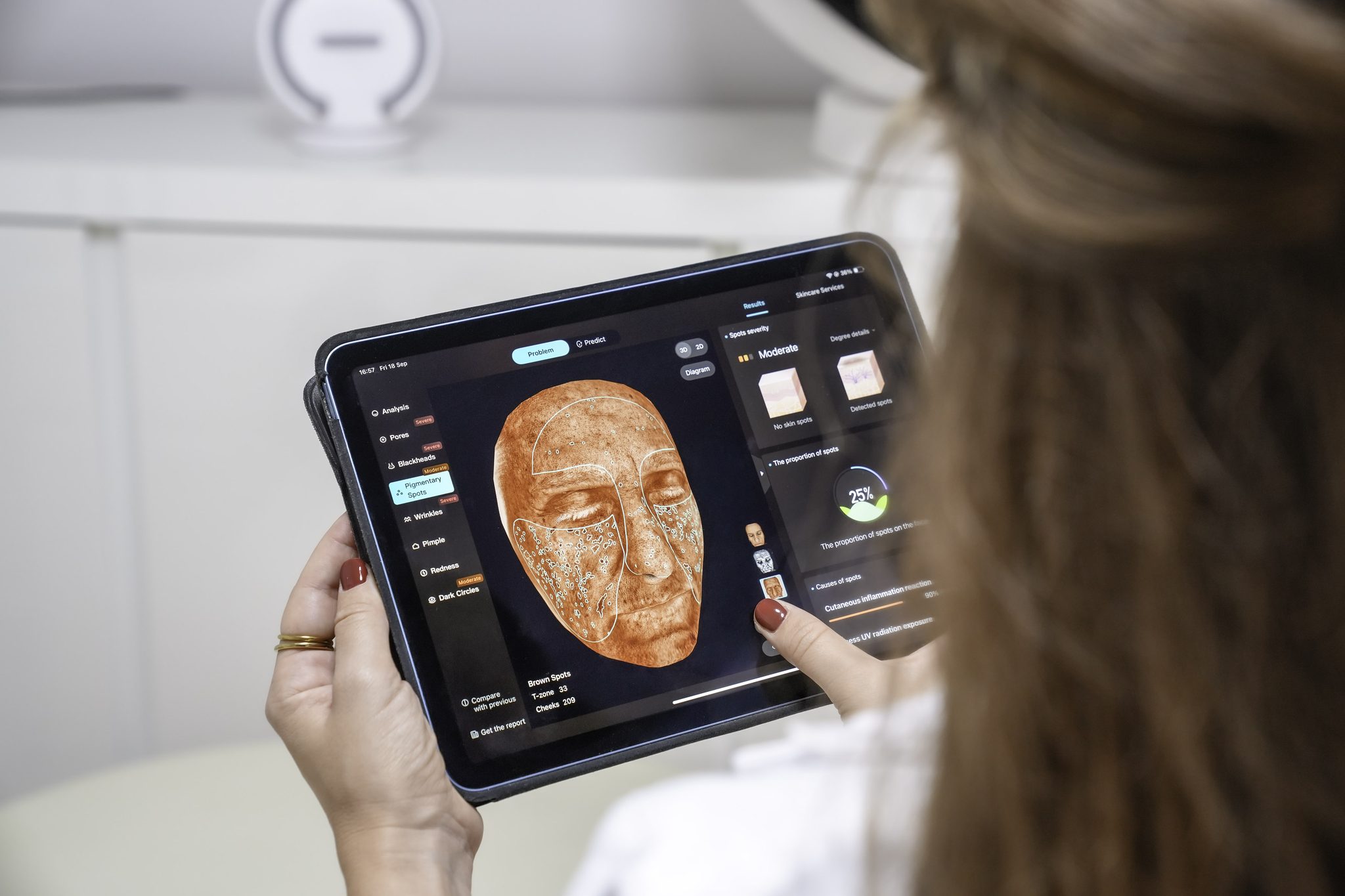
- EVE M Panoramic AI skin analyzer
Signs of hyperpigmentation
Signs of hyperpigmentation
Hyperpigmentation is a result of altered melanin production, which causes uneven skin pigmentation. It can result as dark spots or patches on the skin.
Some other signs are uneven skin tone, freckles, melasma, sunspots or age spots, post-inflammatory hyperpigmentation.
Hyperpigmentation can have a significant impact on a person's self esteem and confidence.
Claims related to pigmentation
- Brightening
- Skin lightening
- Skin whitening
- Dark spot decrease
Measurement principles and instruments
Measurement principles and instruments
To prove brightening, pigmentation evaluation, skin lightening, skin whitening and dark spot decrease claims we measure the following parameters using the following instruments:
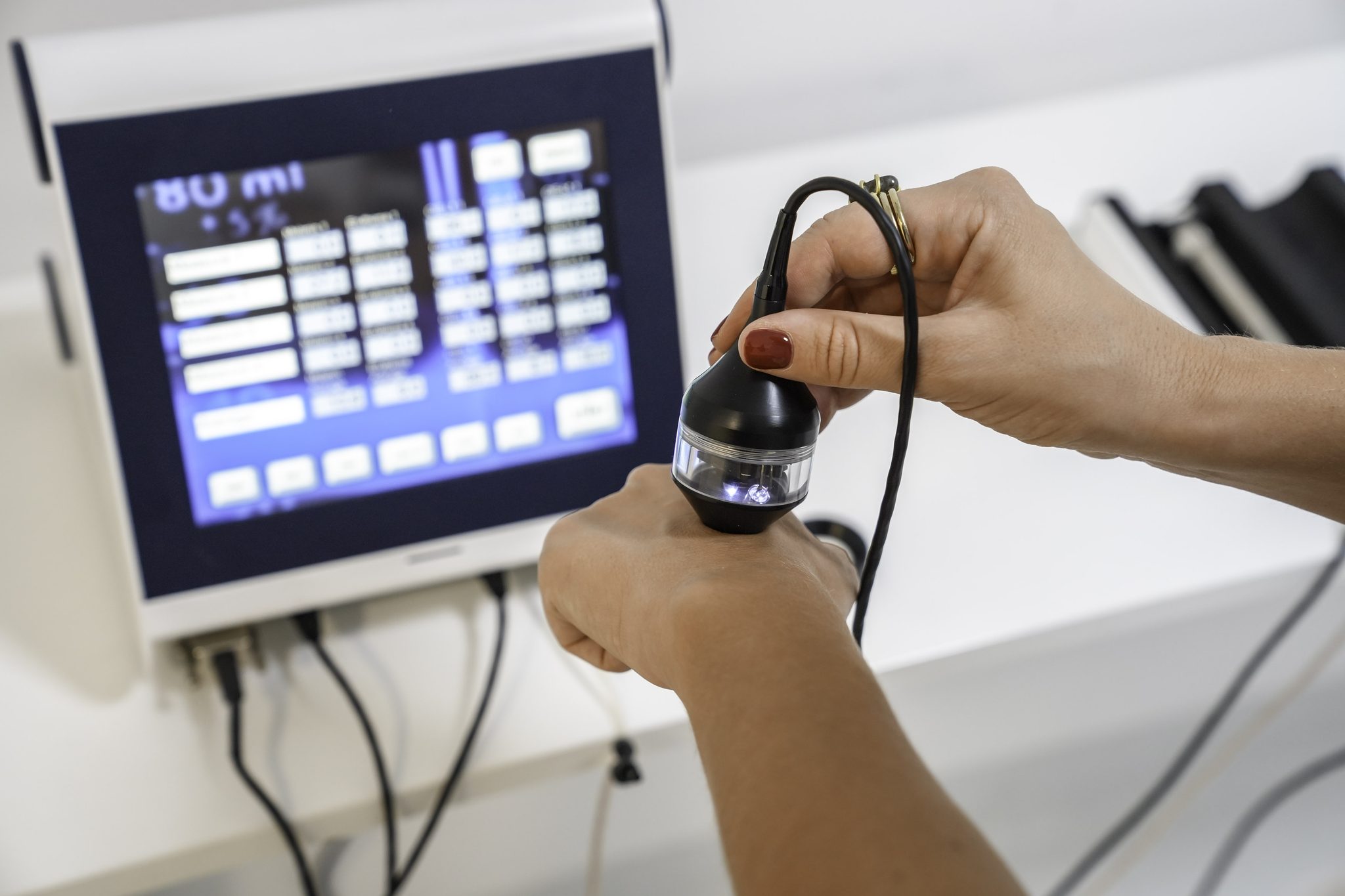
Evaluation of melanin content
- Dermalab (Cortex Technologies)
- Soft FX (Callegari, 1930)
Before / After face imaging
- EVE M Panoramic AI skin analyzer
See our results
Microcamera Soft FX
(Callegari, 1930)

Example of hyperpigmentation

Graph visualisation
EVE M Panoramic AI skin analyzer

Example of pigmentation spots
Skin pigmentation

Skin pigmentation
Skin pigmentation is caused by a natural pigment called melanin. Melanin is produced and distributed by melanocytes; a minor population of specialized skin cells found in the basal layer of the epidermis. The melanin is distributed to keratinocytes, which proliferate and move toward the skin surface, giving the skin its characteristic color. Melanin can also be found in hair follicles and is responsible for hair color.
Skin pigmentation involves the following steps: melanocyte activation (when exposed to sunlight), melanogenesis (conversion of tyrosine into melanin), melanosome transfer (from melanocytes to keratinocytes), distribution and color and protection from UV radiation (melanin absorbs and scatters UV radiation).
Melanin is essential for UV protection of the skin. Sun exposure (UV light) triggers the production of melanin and is the main cause of uneven skin pigmentation, often referred to as hyperpigmentation.
A protocol built for your claims.
Efficacy testing protocol is prepared for each product individually with close cooperation with the sponsor. Based on the claims, usage regime and efficacy expectations, we prepare a protocol that is suitable for the type of product and can confirm product efficacy. The studies can be performed over a different time period (from a few days to several weeks or months) depending on the claim and type of measurement.
Ready to substantiate your brightening claims?
Speak with our testing experts about pigmentation evaluation, instruments, and a protocol tailored to your product.
